
Find Death Records in Itasca County
Itasca County death records can be requested through the county recorder's office in Grand Rapids or through the Minnesota Department of Health, which maintains statewide death records from 1908 to the present. If you need a certified copy for legal or financial purposes, or a noncertified copy for personal research, this page covers the steps, costs, and eligibility rules that apply. Historical records going back before 1908 are available through the Minnesota Historical Society.
Itasca County Overview
Requesting Itasca County Death Records from the County
The Itasca County Recorder in Grand Rapids holds death records filed in the county from 1997 forward. The recorder's office also handles births, marriages, and other vital documents. You can find contact details, office hours, and mailing information on the county website at co.itasca.mn.us. Requests can be made in person or by mail. If you go in person, bring a valid photo ID and be ready to state your relationship to the person who died.
For deaths that took place before 1997, the county may have some older local records, but you'll likely need to contact the Minnesota Department of Health for complete coverage. MDH has statewide records from 1908 forward and can issue certified copies of Itasca County deaths from that period. Their main death records page is at health.state.mn.us/people/vitalrecords/death.html, and you can reach MDH by phone at 651-201-5970.
The Itasca County Recorder website is the starting point for local records requests and county contact information.
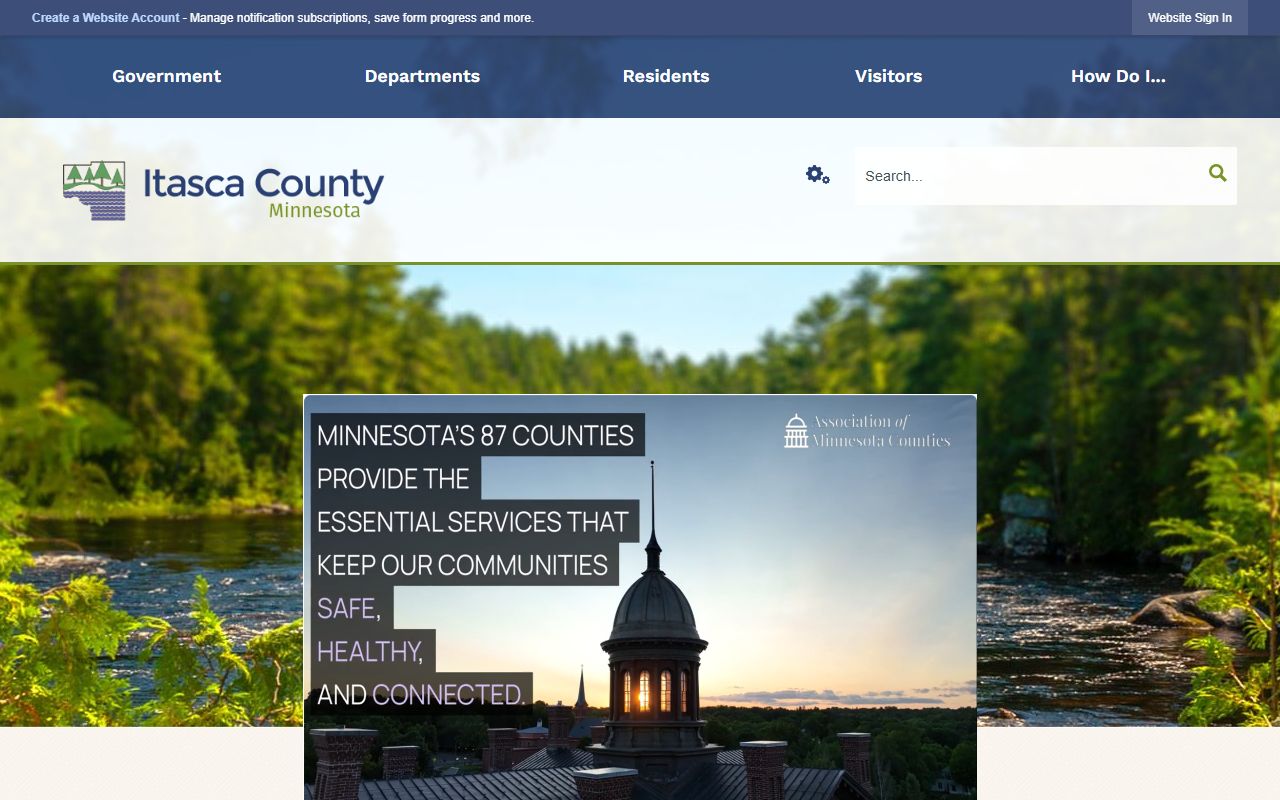
The site lists recorder office details and links to county services that can help you start your records request.
Ordering Through the Minnesota Department of Health
MDH is the main source for certified death records in Minnesota. They process requests by mail and online. To apply by mail, download the application form at health.state.mn.us/people/vitalrecords/docs/dcappia.pdf, fill it out, and send it with payment and a copy of your photo ID. Mail orders are processed in the order they arrive, and processing can take a few weeks depending on demand.
If you want to order online, MDH works with VitalChek for web-based orders. VitalChek charges an extra service fee on top of the state's standard rate. You can pay by credit or debit card through that platform. Rush processing is also available for an added fee if you need the record quickly.
When you apply, you'll need to provide the full name of the person who died, the approximate date of death, and the county where the death took place. Providing more detail helps MDH locate the record faster, especially for common names or older records.
Who Is Eligible to Receive a Certified Copy
Minnesota limits access to certified death records under Minnesota Statute 144.225. Close family members have the clearest right to access. This includes spouses, parents, children, grandparents, grandchildren, and siblings. Legal representatives acting on behalf of the estate can also request records. Government agencies with a lawful purpose may access records as well.
If you don't qualify for a certified copy, you can request a noncertified copy instead. Noncertified copies carry the same information but do not bear the state seal. They work for genealogy and personal research but are not accepted for legal matters like probate or insurance claims. MDH lists all eligibility rules at health.state.mn.us/people/vitalrecords/tangible.html.
Fees for Itasca County Death Record Copies
The state sets the fee schedule for death records in Minnesota. A certified copy costs $13 for the first copy. Each additional certified copy of the same record, ordered at the same time, costs $6. A noncertified copy also costs $13. These fees apply whether you request from MDH or the county recorder.
If you use VitalChek to order online, expect to pay an extra $7 for standard service or $17.50 for rush delivery. Mail orders sent directly to MDH do not carry those surcharges. If a record is not found after you've paid, the fee is not refunded, so try to confirm basic details first before submitting your request.
What a Death Record Contains
A Minnesota death certificate lists the full legal name of the deceased, the date and county of death, age, birthplace, and the names of parents and spouse. The cause and manner of death are recorded by the physician or medical examiner. This cause-of-death section is restricted. Only close relatives and others who meet the criteria in Statute 144.225 can receive a full record that includes cause of death.
Death records are used for many purposes. Settling an estate often requires one or more certified copies. Banks, insurers, and government agencies like the Social Security Administration may each require their own copy. Genealogy researchers use these records to trace family lines and verify dates and relationships. In all cases, the certified copy is the version accepted for official use.
Some records may also be subject to restrictions under Minnesota Statute 13.10, which governs government data privacy. If a record has restricted fields, the copy you receive may not show all information.
Historical Records and Genealogy Research in Itasca County
For deaths that happened before 1908, no state registration system was in place. County-level records from that era vary in completeness. The Minnesota Historical Society is the best resource for older records. MNHS holds vital records on microfilm and can help genealogists trace deaths that occurred in Itasca County before modern registration began. Their research library is at 345 W Kellogg Blvd in St. Paul, open Thursday through Saturday from 10am to 4pm. Call MNHS at 651-259-3300 or check their guide at libguides.mnhs.org/vital/death.
Church records, cemetery registers, and newspaper obituaries from Itasca County can also fill in gaps for older deaths. Local libraries and historical societies in the Grand Rapids area may hold these materials. MNHS can point you toward the right collections if you're not sure where to start.
Cities in Itasca County
All communities in Itasca County file death records through the county recorder in Grand Rapids and the Minnesota Department of Health.
Nearby Counties
These counties are near Itasca County. Death records are held by the county where the death occurred.