
Find Death Records in St. Paul
St. Paul death records are handled through a joint arrangement between the City of St. Paul and Ramsey County. As the state capital of Minnesota with a population of around 310,000, St. Paul maintains its own vital records office through the City Clerk while Ramsey County also holds death certificates from 1997 forward. This page explains both offices, how to request a certified death certificate, where to look for older records, and how to use the Minnesota Historical Society's resources, which are located right in St. Paul.
St. Paul Overview
How St. Paul Death Records Work
Birth and death records in St. Paul are maintained through a joint effort between the City of St. Paul and Ramsey County. This is somewhat unusual. Most Minnesota cities do not hold their own vital records. St. Paul's City Clerk office manages death records alongside the county, which means you have two in-person options for getting a certificate.
The St. Paul City Clerk handles birth and death records at 15 Kellogg Blvd W, Saint Paul, MN 55102. You can reach the office by visiting stpaul.gov/departments/city-clerk/birth-death-records or the main City Clerk page at stpaul.gov/departments/city-clerk. The City Clerk office is a good option if you are already downtown and need a death certificate for a St. Paul death quickly. Staff can process in-person requests and provide both certified and noncertified copies.
Ramsey County also provides vital records through its own office. Visit ramseycounty.us/residents/vital-records/birth-death-records for current address, hours, and contact information. The county holds records from 1997 forward for deaths that occurred anywhere in Minnesota. Both the city and county use the same underlying state records system, so either office can provide the same certified copies for deaths in St. Paul.
The screenshot below was taken from the St. Paul City Clerk's website, which covers the city's vital records services including death certificates.
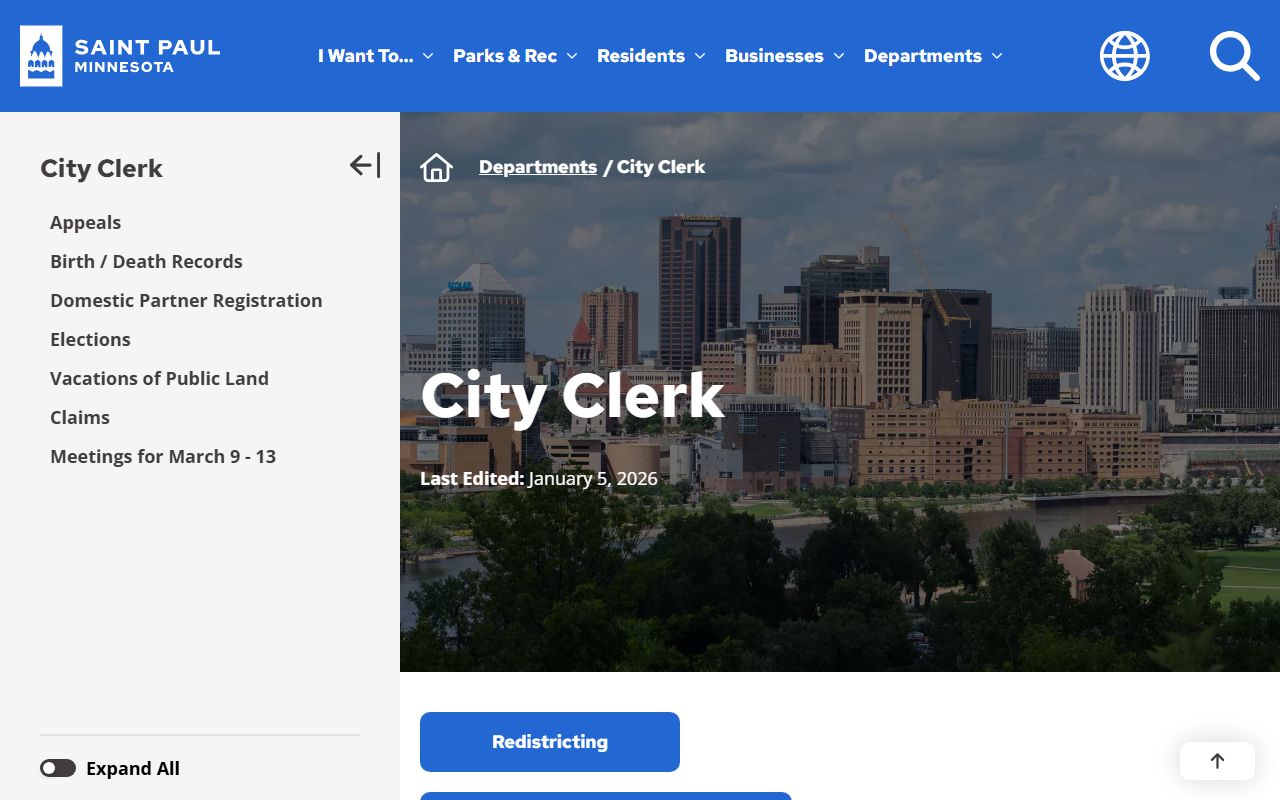
The City Clerk page explains current fees, what identification you need to bring, and who is eligible to request certified copies.
Requesting a Death Certificate in St. Paul
Three options are available: in person, by mail, or online. In person is fastest and works well since both the City Clerk and Ramsey County offices are in central St. Paul.
In person, visit either the St. Paul City Clerk at 15 Kellogg Blvd W or the Ramsey County office. Bring a valid photo ID. You may also need to show your relationship to the deceased to receive a certified copy. The fee is $13 for the first certified copy and $6 for each additional copy of the same record ordered at the same time. Noncertified copies cost $13 and are available to anyone without proof of eligibility. In-person requests are usually processed the same day.
By mail, complete the MDH death certificate application form at health.state.mn.us/people/vitalrecords/docs/dcappia.pdf and have it notarized. Mail the form with payment by check or money order made out to MDH, plus a copy of your photo ID, to: Minnesota Department of Health, P.O. Box 64882, St. Paul, MN 55164-0882. Call MDH at 651-201-5970 for help. Mail processing takes longer, so plan ahead.
Online, order through VitalChek at vitalchek.com. VitalChek adds a $7 service fee for standard processing or $17.50 for rush. The certificate is mailed to you. It is convenient but not instant. Most requests take several business days before the certificate arrives.
Who Can Request Certified Copies
Under Minnesota Statute 144.225, certified death certificates are available to the spouse, parent, child, sibling, grandparent, grandchild, or legal representative of the deceased. Attorneys and government agencies with a legal need also qualify.
If you do not qualify for a certified copy, you can still get a noncertified copy. It has the same information but no official state seal. Noncertified copies work for genealogy research or personal files. They are not accepted by banks, courts, or insurance companies in place of a certified copy. The cost is the same at $13 each.
Check the MDH eligibility page at health.state.mn.us/people/vitalrecords/tangible.html before you apply if you are unsure whether you qualify. It lists the documentation you need to include and explains what to do if you have a specific legal need for the record.
Historical Death Records and the Minnesota Historical Society
St. Paul is home to the Minnesota Historical Society, one of the best resources for historical death records in the state. MNHS is headquartered at 345 W Kellogg Blvd in St. Paul, just blocks from the City Clerk office. The Gale Family Library at MNHS is open Thursday through Saturday, 10:00 a.m. to 4:00 p.m. Call 651-259-3300 for help planning a research visit.
MNHS holds a wide range of historical vital records, including death registers, church records, and county records that predate the state's registry. Their death records guide at libguides.mnhs.org/vital/death explains what they hold and how to find it. Because MNHS is located in St. Paul and has deep ties to the city, its holdings for St. Paul and Ramsey County deaths are especially rich. You can find death notices from city newspapers, church burial registers, and other local sources going back to the 1800s through their collections.
For deaths before 1908, MDH has no records. The state did not begin collecting death certificates statewide until that year. MNHS and county historical resources are your main options for deaths in that earlier period. For deaths from 1908 to 1996, certified copies come from MDH by mail. From 1997 forward, both Ramsey County and the St. Paul City Clerk can provide copies.
The St. Paul Public Library at sppl.org also holds local history collections and genealogy resources that may help with research into St. Paul deaths. Their central branch has newspaper archives and city directories that can help you trace older deaths before you order a formal certificate from a government office.
Nearby Qualifying Cities
These nearby cities also have death records pages. Each city files records through its county office.